
Apis mellifera
Hex

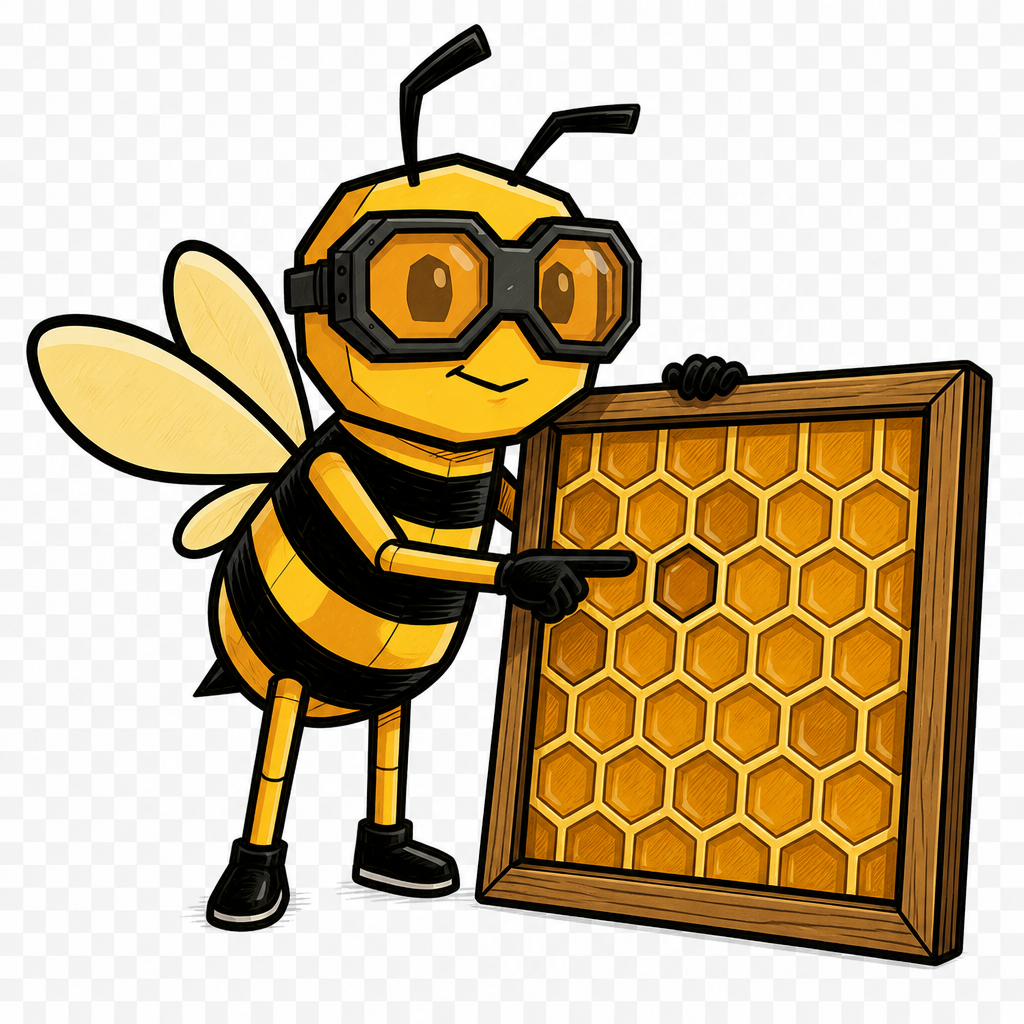
Hex is the companion here. Yellow, black, a little too curious. He stands for the insect the pages are about: the Western honey bee, Apis mellifera, working citrus, Bidens, and cabbage palm from Conway Road to Kissimmee.
He is named Hex because a honeycomb cell has six sides. That is not decoration. Comb is where brood is raised and honey is stored, and the hexagon is how a colony spends the least wax for the room it gets.
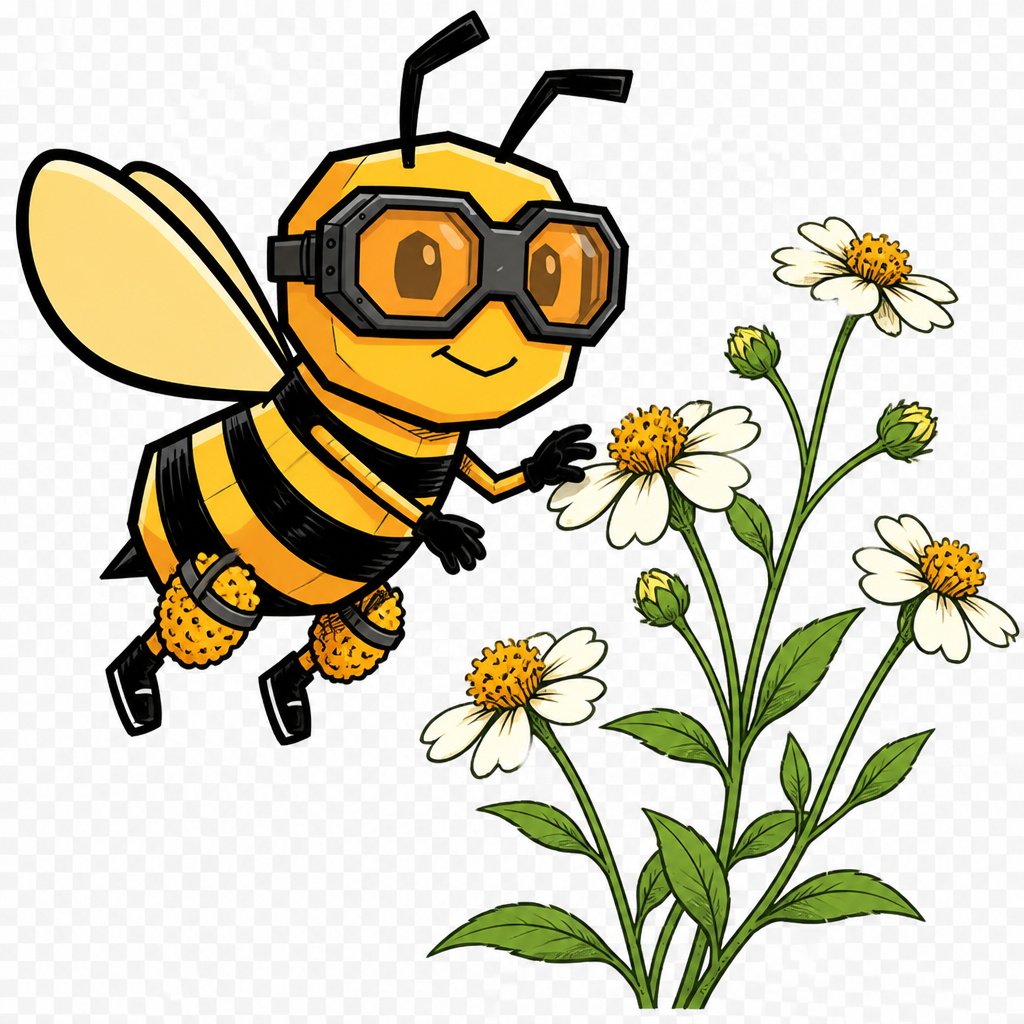
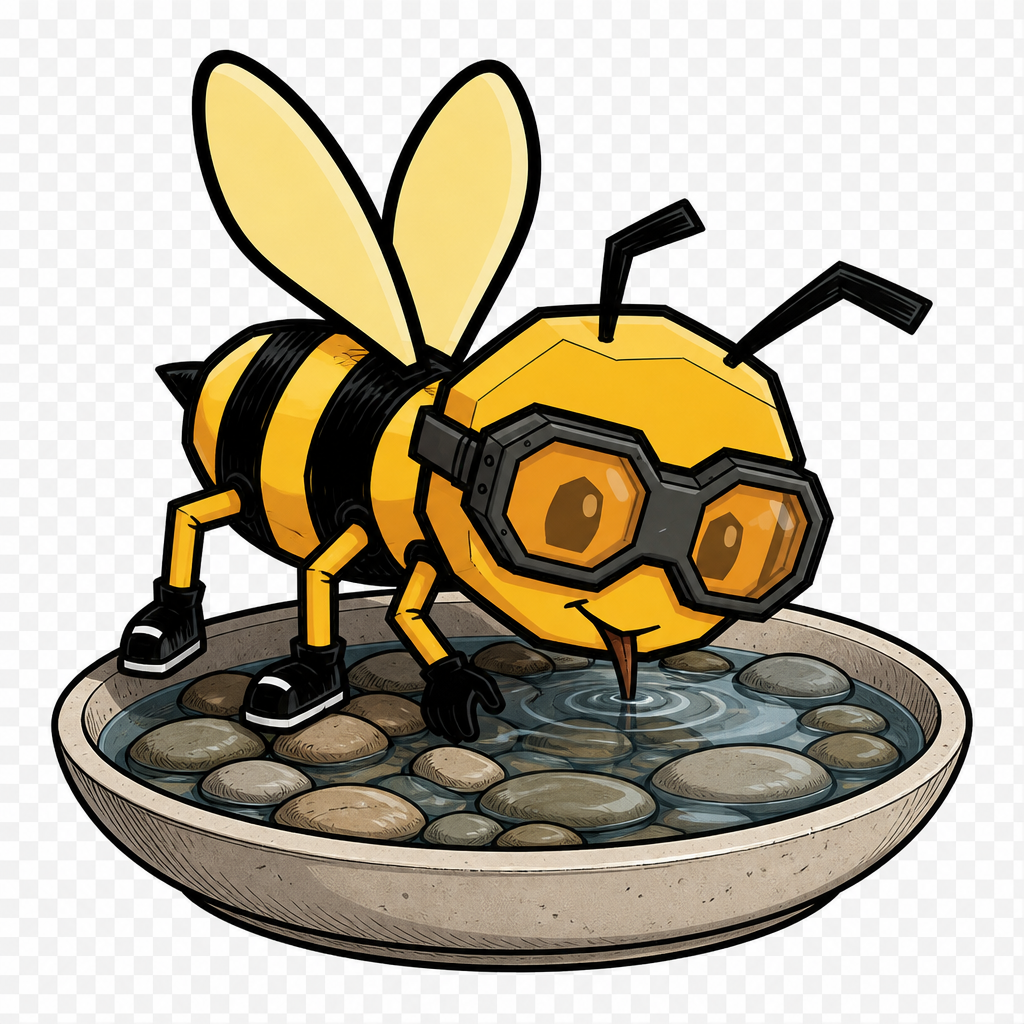
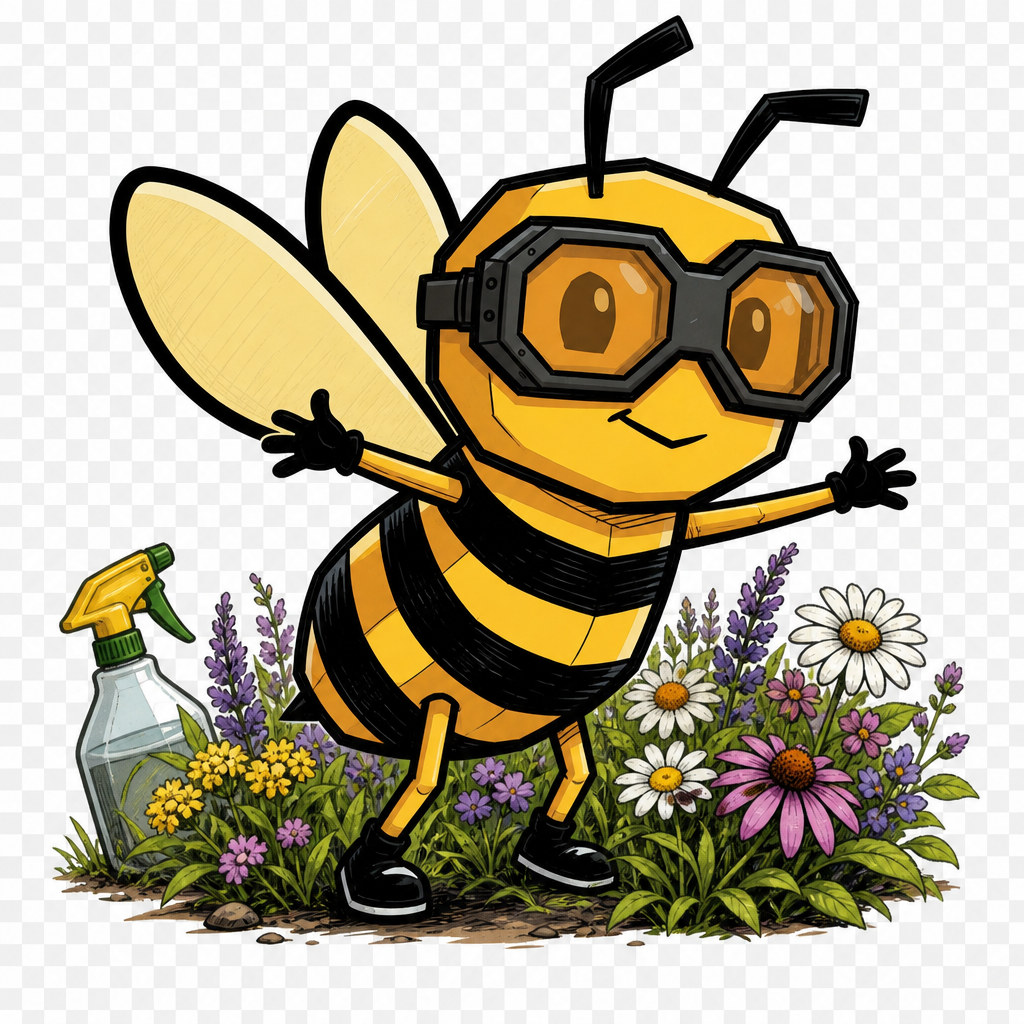
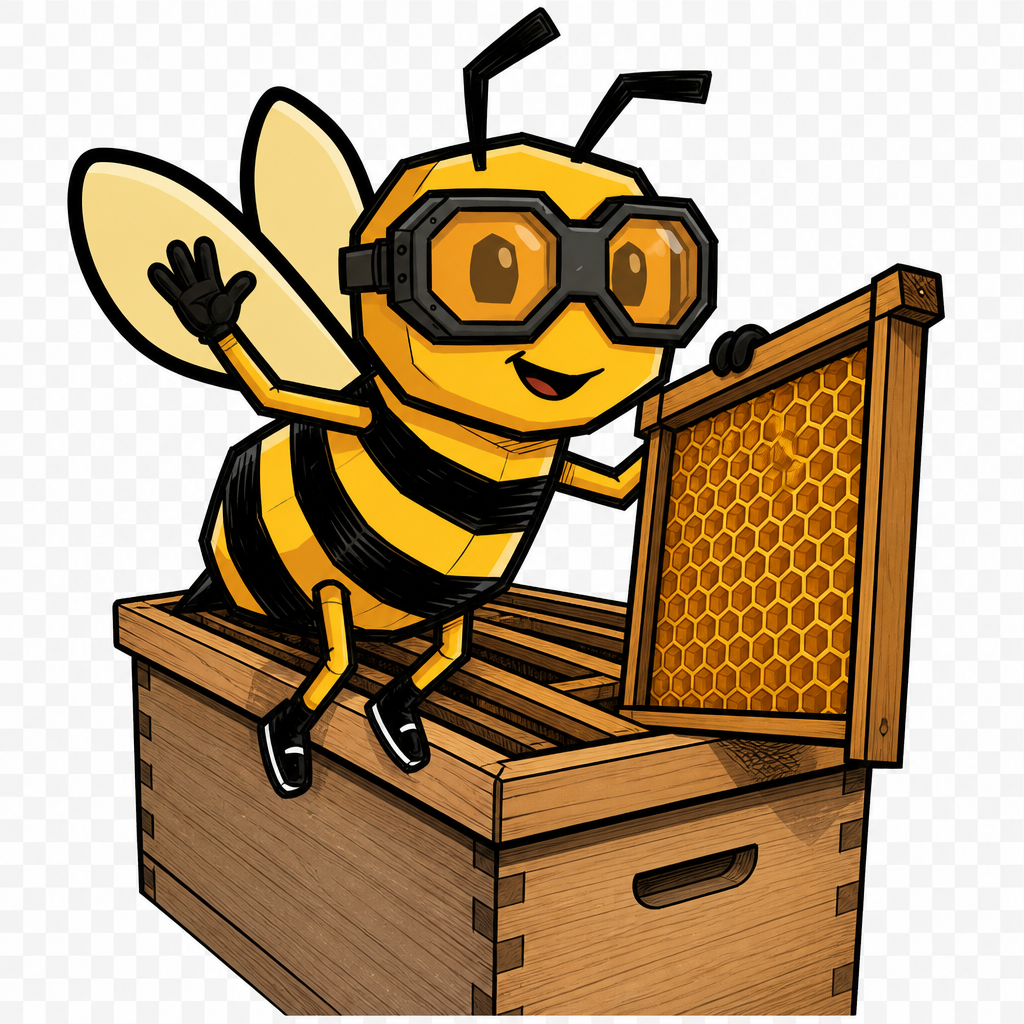

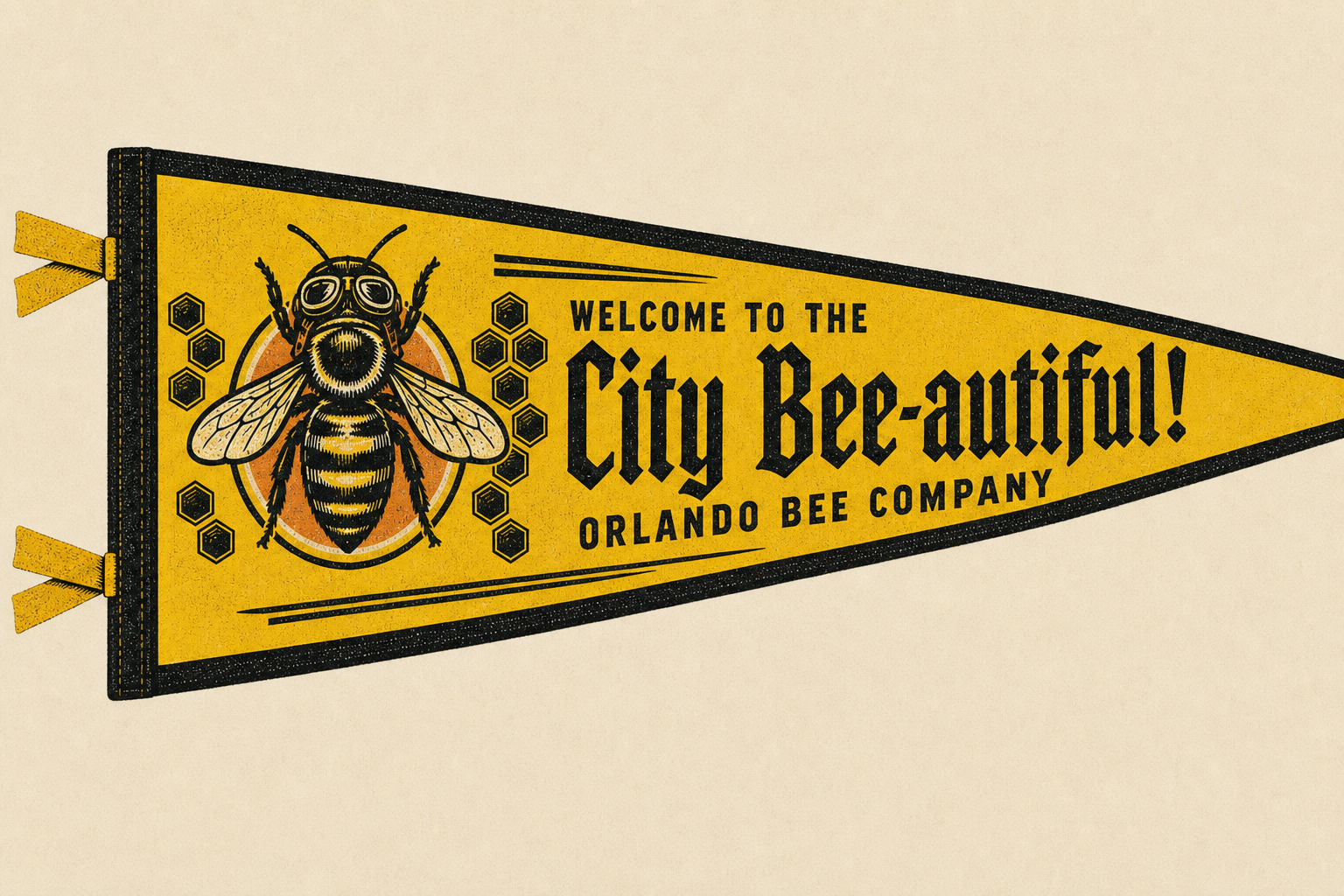
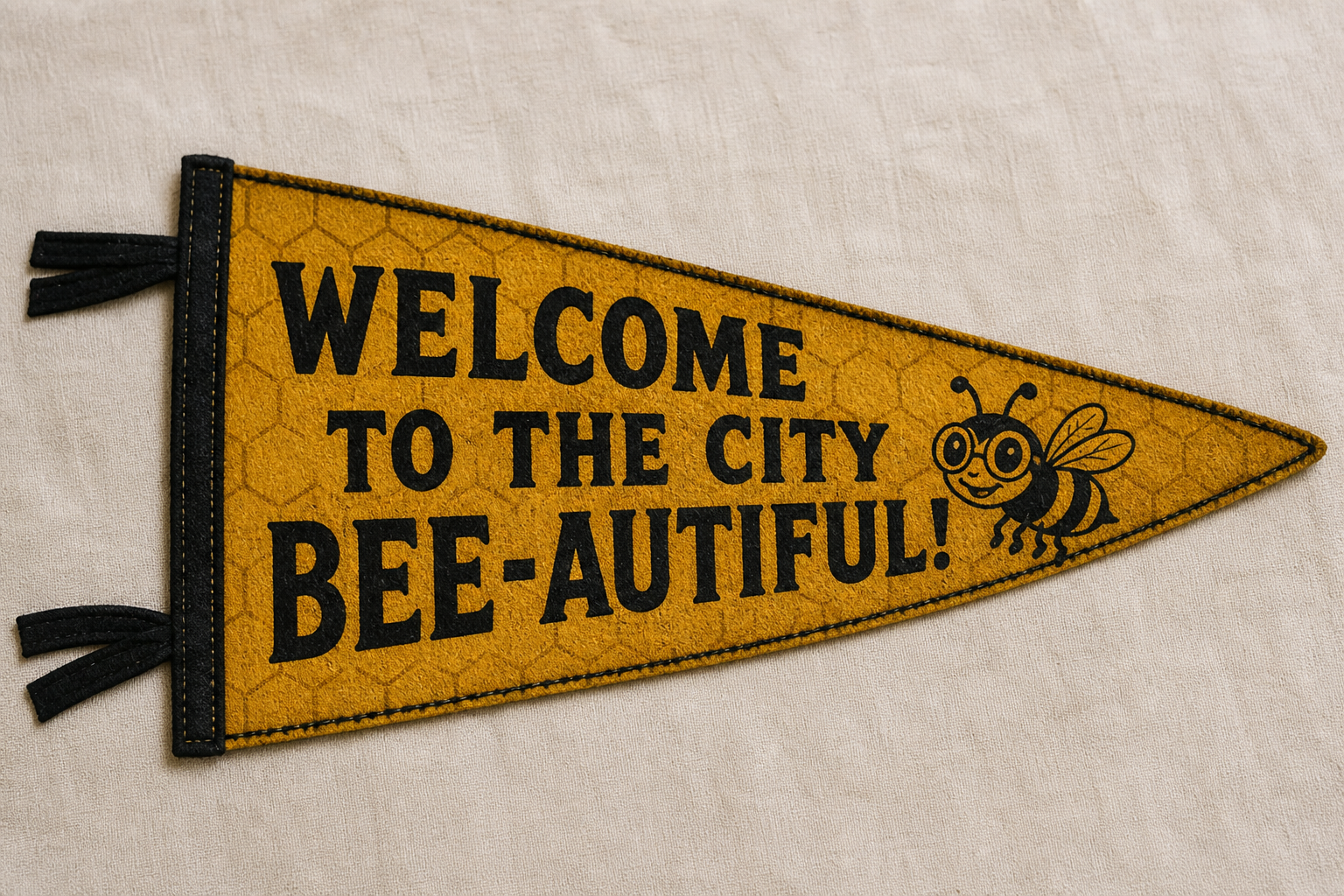
Welcome to the City Bee-autiful. Orlando has called itself The City Beautiful since 1908. Hex only added one letter. The pennant is the shop mark, not a caption pasted over the flag.
Why the cells have six sides
Only three regular polygons tile a plane without gaps: equilateral triangles, squares, and hexagons. Among those, the hexagon encloses the most area for a given length of wall. Thomas Hales proved that statement in 1999. The theorem is the honeycomb conjecture: a hexagonal grid divides a surface into equal areas with the least total perimeter.
Wax is expensive. Workers secrete it from glands, chew it, and build with it. Darwin put the pressure in one line: the colony that wasted the least honey making wax did best. A wall shared by two cells is cheaper than two walls. Six sides, three walls meeting at 120 degrees, is the packing that leaves no leftover corridor of empty wax.
Bees do not sit down with a protractor. Early comb often starts as a bundle of round tubes. Warm wax and three cells pressing together tend toward straight walls. Queen cells, built singly, stay lumpy. The hexagon shows up where cells share walls, which is most of the comb a child will ever see.
That motive power of the process of natural selection having been economy of wax; that individual swarm that wasted least honey in the secretion of wax, having succeeded best.
Three castes in the box
A colony is not one bee. Welcome to the Apiary treats a hive as three castes sharing a nest: a queen who lays, workers who do the work of the house and the field, and drones who are the colony’s sons. Comb cells hold their brood as well as the honey Hex is named for.
Unlike in northern climates, honey bees are able to fly, and queens are able to lay eggs almost any time of year.
What he is doing in this heat
Hex leaves the box when the air still holds last night’s rain. He does not need the name of the lake. He needs a round of water, a lime in flower, a strip of Bidens the mower missed. Keeping Bees in Florida’s Central Florida ridge note is the map under that flight. The year page walks the months. The learn page names Varroa, super, nuc, and smoker.
If a child asks which insect is on the soda can, send them to the picnic page: yellowjackets want the can; honey bees want flowers.
Sources
- Hales, The Honeycomb Conjecture (arXiv math/9906042). Proof that a hexagonal grid divides a plane into equal areas with least perimeter.
- Darwin, On the Origin of Species. Wax economy as the selection pressure on comb.
- Welcome to the Apiary. Castes, comb, development times on the inspection sheet.
- Keeping Bees in Florida. Year-round flight and laying in this climate.