
The label
The label is the law. Call before the spray.
A yard hive in Orange County still flies two to five miles. That circle can cover about 80 square miles. The spray that hits Bidens on a ditch is in that circle whether you invited it or not. Minimizing Honey Bee Exposure to Pesticides is the UF/IFAS paper for growers, applicators, and keepers. This page is that paper. It is not a recipe and it does not name a miticide.
Pesticide applicators are required by law to follow the label.
What the pesticide paper actually names
The western honey bee is the pollinator Florida agriculture leans on. The paper counts over 50 US crops and at least 13 Florida crops that either need honey bees or yield more when bees are plentiful. Florida also has more than 315 wild bee species. Nearly 5,000 registered keepers managed more than 620,000 colonies on this revision. Rental colonies move. A backyard box still flies the same hours.
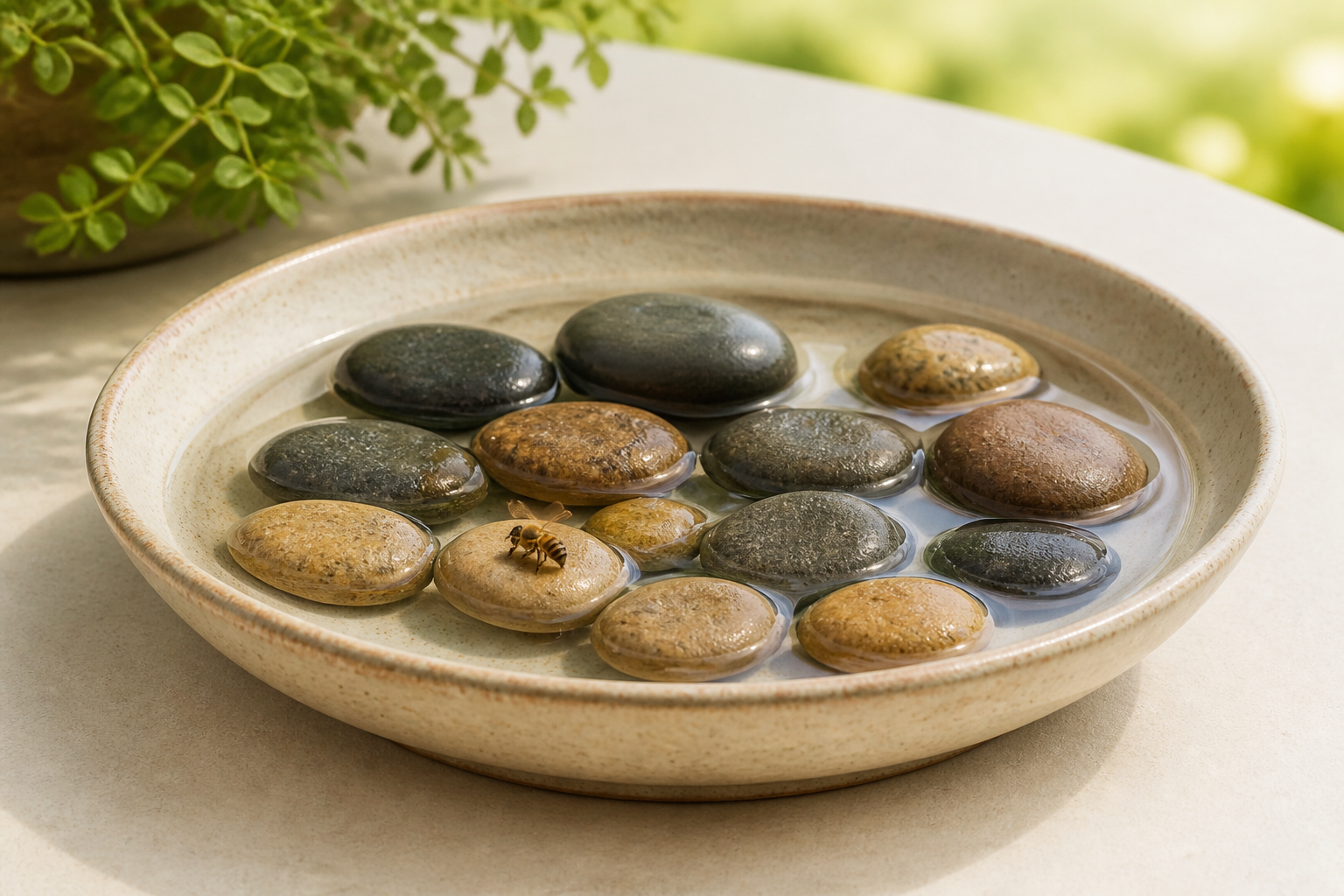
Foragers work when air is above about 55°F to 60°F. They are most active from 8 a.m. to 5 p.m. Evening applications, if the label allows them, give some products time to dry overnight. Ground work is generally less hazardous than aerial work. Do not spray open water or an on-site apiary. Do not dump a tank so it puddles. Bees use water to cool the hive. A clean water station so the colony is not drinking the ditch. Get this. Bidens alba as a no-spray buffer, not a bottle. Get this. Minimizing Honey Bee Exposure to Pesticides names Spanish needle as a bloom bees visit around fields. Spray drift onto that bloom is still a bee job.
Acute toxicity to bees uses an LD50. Highly toxic is under 2 µg per bee. Moderately toxic sits between 2 and 11 µg. Practically non-toxic at an acute level is 11 µg or more. Signal words on a bottle are about mammals, not bees. Residual toxicity past 8 hours is "extended residual toxicity" on this paper. Microencapsulated products tend to be the worst formulation for bees. Granular products tend to be the least. Those rankings have exceptions. Read the live label.
Keeper jobs on this paper
Register with FDACS. Mark woodenware with the firm number. Tell the local mosquito-control district where the boxes sit and ask for spray notices. Most adulticide flights are evening work, which this paper calls a smaller risk. Keep a log. A hill is a better pad than a valley that collects drift. Boxes about 500 feet off a road typically miss non-ag weed and mosquito work. Have a move plan. If a grower warns you, you move.
Talk to the grower whose bloom you work. Write the count of hives, the dates, a holding pad, how you mark the yard, and how you both get reached in a hurry. A prior season is not permission for this one. Do not sublet a pad. The sample pollination agreement is the sample agreement. FDACS bee protection for growers is the grower door. Hive IPM for Varroa and small hive beetles stays on those pages. In-hive chemistry is a label job. This page does not pick a brand.
If bees are down at the entrance
Count mites first. Minimizing Honey Bee Exposure to Pesticides says Varroa, pathogens, poor feed, and a weak queen are the usual national causes of decline. Acute spray often looks like a pile of dead and shaking bees at most or all boxes, not one. Foragers may spin on their backs, look chilled, or fight at the door. Those piles dry and get eaten. A keeper who visits weekly can miss them. Chronic hits look like thin brood and a winter crash. Photograph, note weather, firm number, and any product you put in the box, then call FDACS-DPI Apiary Inspection. Guessing a neighbor’s tank mix from the ditch is not a report.
Can I spray the blooming Bidens if the crop itself is not in bloom?
Minimizing Honey Bee Exposure to Pesticides says bees have been killed when the crop was not in bloom because weeds were. Some labels restrict applications when weeds bloom. Mow only when that is the better habitat choice. Drift onto a bloom is still exposure.
Does this page sell a pesticide?
No. The bottle and the current label live on the manufacturer page and on Minimizing Honey Bee Exposure to Pesticides. Habitat work here is water, forage, and leaving a broadcast spray on blooming plants in the bottle.
Sources
- Minimizing Honey Bee Exposure to Pesticides. Label is the law. Forage hours, formulations, grower notice, mosquito-control reporting, how a kill can look.
- Sample pollination agreement. The contract template Minimizing Honey Bee Exposure to Pesticides tells growers and keepers to write.
- FDACS honey bee protection for growers. State grower door named from Minimizing Honey Bee Exposure to Pesticides.