
Screws and paint
Screws, glue, paint. Nails work themselves out.
Hive wood lives outside. It swells in a Florida wet week and shrinks in a dry one. Nails back out. Joints open. Water gets in. Preserving Woodenware in Beekeeping Operations is the UF/IFAS paper. Ellis, Kern, and Zettel Nalen. This page is that paper. The stack is the parts list. This is how the wood lasts.
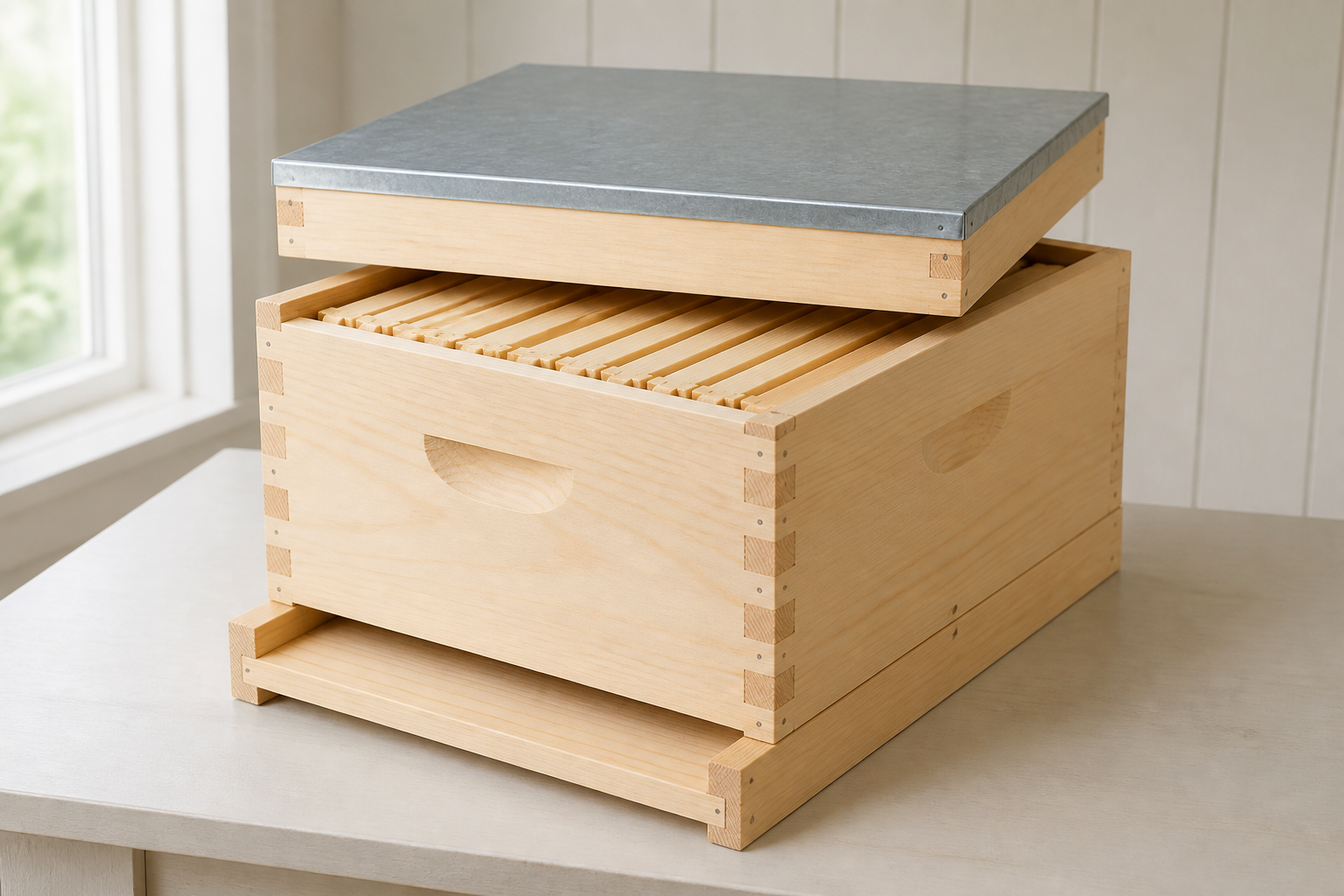
Assembling hive equipment with screws and wood glue adds strength and integrity to the equipment.
Assemble while it is still a kit
Manufacturers ship nails. The paper wants screws. Wet wood swells. Dry wood shrinks. Nails work out of the joints and leave gaps. Screws hold through that cycle. Use them on lids, supers, and bottom boards. Frames are the exception. Florida humidity swells a joint and then dries it out. Exterior screws stay in a lid and a super through that cycle. Get this.
Glue the joints first, then screw. Outdoor-rated wood glue, enough that it squeezes out when the boards meet. That squeeze is the seal. Joints take the stress. Tension, torque, and ordinary yard abuse all land there. The bottle that says outdoor. Indoor yellow glue fails after one wet week on a Central Florida lid. Get this.
Water is the rot. Kiln-dried, rot-resistant wood such as cypress is the species they name. Pre-treated lumber is out. After the box is screwed, run a bead of non-toxic silicone caulk down the outside joints and smear it flat with a finger. Rain hits that seam first.
Paint the weather side
Outer covers, supers, hive bodies, and the whole bottom board get outdoor paint. Two or three coats. Color does not matter except skip very dark shades, which hold heat. Inner covers stay unpainted. Inside walls stay unpainted. Frames stay unpainted. Paint on those faces traps moisture in the nest. package bees said the same thing on install week.
Copper naphthenate is the only preservative active ingredient this paper allows, and only on wood that will face outside. A quick dip or a brush coat is how most US keepers use it. Australian work the paper cites wanted hours or days of soak for real moisture protection. That soak almost never happens here. Screws, glue, caulk, rot-resistant wood, and paint can skip the preservative. If you still treat, only the outer face. Bees walk the inside.
A salt soak for three days is a method some people pass around. The paper does not recommend it. Salt speeds corrosion on screws, queen excluders, and frame spacers.
Termites are a Florida wood job
Two kinds hit hive wood here. Subterranean termites come from the ground as a mature colony, tens of thousands to millions of workers. Sit the hive off the soil. Concrete blocks, ant-guard stands, metal, or plastic. A wood stand is a bridge. Mud tubes on a stand are the sign. IG097 is the subterranean termite paper they point to.
Drywood termites arrive as a mated pair and live inside one board. Kick-out holes about 1 mm, round, with fecal pellets under them. A white sheet under the hive makes the pellets visible. Opening the hive for ordinary inspections disrupts young pairs. Kiln-dried lumber at build time is the prevention. Recycled lumber goes in a clear plastic bag in the sun until it passes 120 F, or in a freezer four to seven days.
Nails or screws?
Screws on the box. Nails work out when Florida humidity cycles the wood. Frames are the exception on this paper.
Do you paint the inside?
No. Outer faces and the whole bottom board. Inner cover, inside walls, and frames stay bare so moisture can leave.
Sources
- Preserving Woodenware in Beekeeping Operations. Ellis, Kern, and Zettel Nalen. Screws, outdoor glue, caulk, paint, termites.
- Subterranean Termites (IG097). The termite paper Preserving Woodenware in Beekeeping Operations points to.
- Welcome to the Apiary. Paint the outside a week before a package. Same bare-inside rule.