
Swarm traps
A bait hive is a PCO job, not a porch project
Swarm Trapping for Pest Control Operators is the UF/IFAS procedure. O'Malley, Ellis, and Zettel Nalen. The first sentence is the one that matters on a suburban lot. These procedures are not meant for homeowners. Trained pest control operators or registered beekeepers run the trap line. Only people licensed to apply pesticides may apply them. FDACS Bureau of Licensing and Enforcement is who confirms that license.
Please note, these procedures are not meant for homeowners and should only be conducted by trained individuals such as pest control operators or registered beekeepers.
A swarm is a colony splitting, not a mood
The paper points at Swarm Control for Managed Beehives for the biology. A colony does not only make more bees. It also makes more colonies. Before new queens emerge, the old queen leaves with about 30 to 70 percent of the adults. She settles on a branch, a fence, a wall. The rest land around her. That cluster can be the size of an orange or the size of a five-gallon bucket. Scout bees leave it to find a cavity. The cluster can sit minutes or days. Then the whole group moves. A PCO can arrive to an empty branch because the scouts already picked a wall.
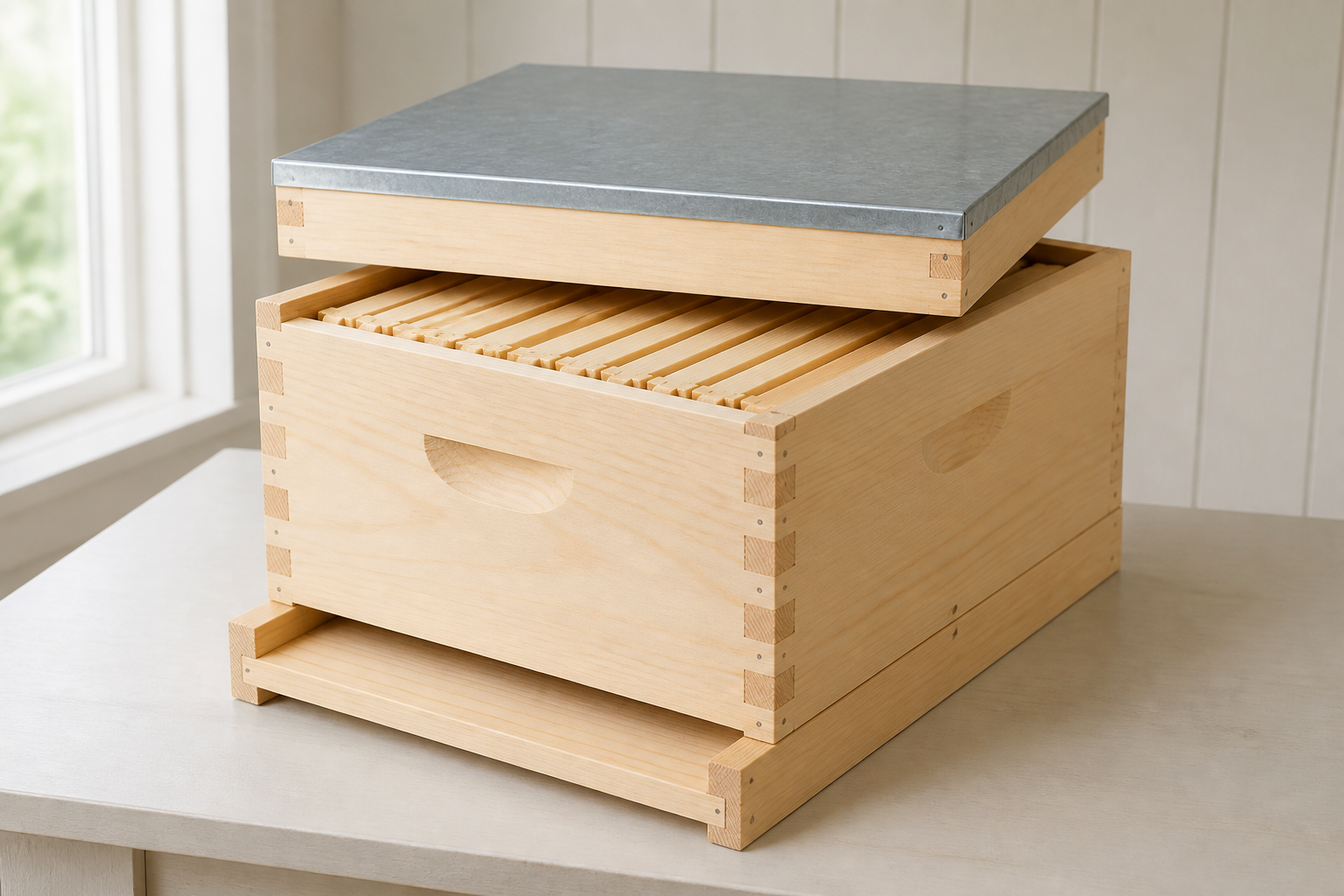
Swarm trapping catches that group before it takes a meter box or a soffit. Fiber pulp pots, five to ten gallons, body and lid, often treated against mold. A liquid pheromone lure in a small vial hangs inside the opening. A five-to-ten gallon pulp pot for a registered keeper setting a bait hive, not a neighbor hanging a bucket off a porch. Get this. The lure from a bee supply shop. Most beekeeping suppliers sell them, the paper says. Get this.
Who hangs it, and who you call
Florida still puts an unwanted swarm or colony on the property owner. A registered keeper or a licensed PCO does the nest. This paper is how some of those operators catch a swarm on the way in, so they do not have to cut a wall later. Three service grades sit in the business section: install the line, check it every 21 days, or let the client watch and call when bees are in. None of those grades is a homeowner with a can of foam.
If the trap already has bees, the paper wants a full suit, a smoker, a bag, and then a licensed kill or a freeze if that is the operator's method. Live removal is the other door, a registered keeper taking the cluster alive. The pesticide steps stay with the licensed operator. Find a Bee Removal Expert is the UF list. School grounds is the administrator page that already said hire, then seal.
The cluster on the oak is gone. Did trapping fail?
Not always. The paper says scouts can find a cavity while you wait. The bees moved. That is swarming, not a vanished attack.
Can I hang a five-gallon bucket and a lure on my fence?
The paper says no for homeowners. A registered keeper can run a bait hive. A neighbor with a bucket is not that keeper.
Sources
- Swarm Trapping for Pest Control Operators. O'Malley, Ellis, and Zettel Nalen. PCO and registered-keeper procedure.
- Swarm Control for Managed Beehives. The biology page this trapping paper points at.
- UF Find a Bee Removal Expert. Who to call from a yard.