
Wax moth
Wax moths eat stored comb. Strong boxes keep them down.
Florida’s mild climate keeps two moths in the yard nearly year-round. Greater wax moth is Galleria mellonella. Lesser wax moth is Achroia grisella. UF already wrote that eggs and larvae show up in almost every colony, and that healthy workers knock them back. This page is that paper, not a fumigant list.
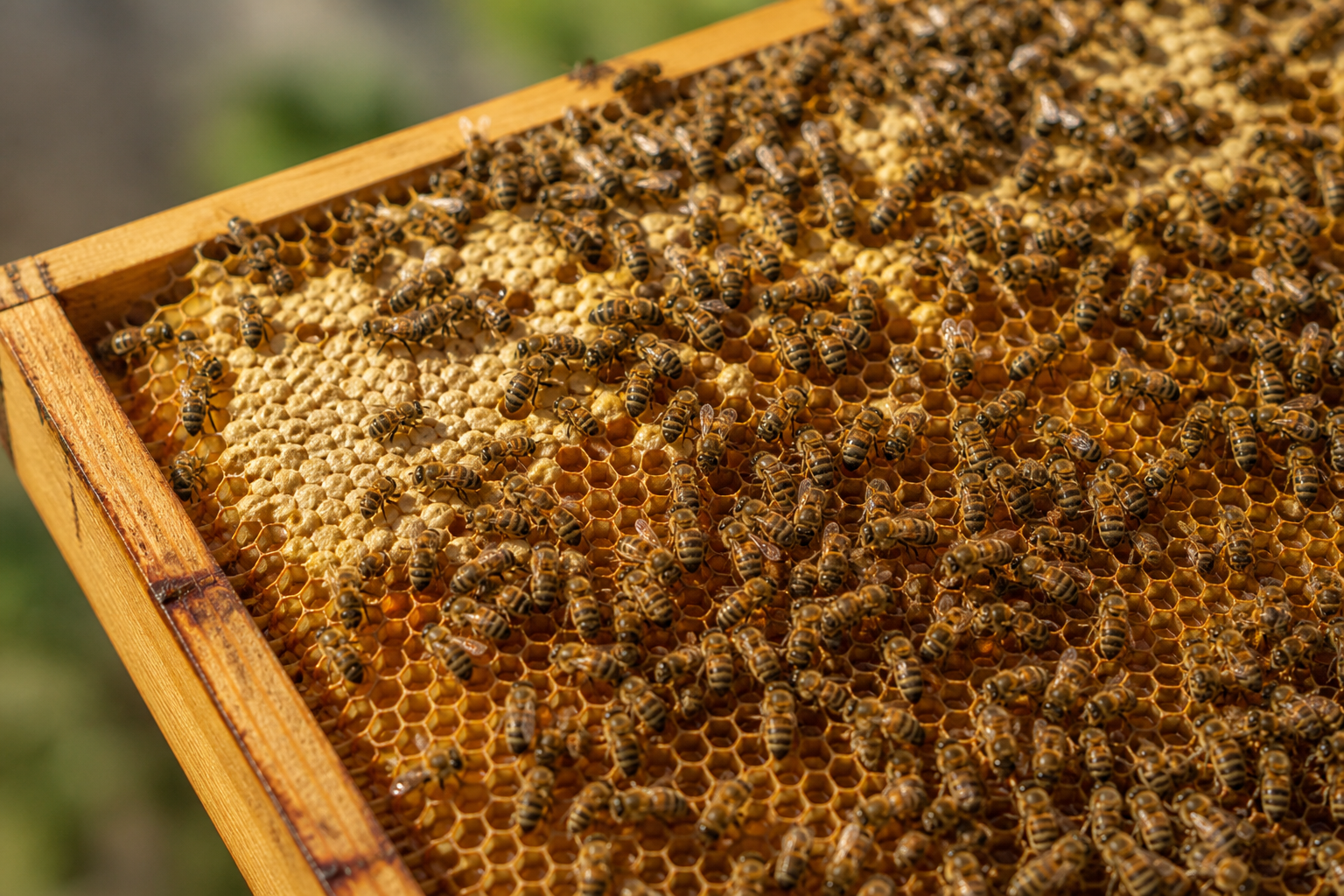
No chemical control options are available for the control of wax moths in living bee colonies.
What Wax Moth Control actually names
After hatching, larvae eat beeswax and the junk in it. They leave frass and webbing. Mature greater wax moth larvae are grey and about 20 mm long. They can bore into woodenware and damage a hive body or a frame. Wax Moth Control is the cite. The UF/IFAS paper is the lesser-moth species page if you need the adult ID.
Eggs and larvae can almost always be found in bee colonies. They are no risk to a healthy colony because workers routinely eliminate them. Large populations usually follow some other hit: starvation, pesticide poisoning, a failing queen, disease. The moths then get established. The paper says they usually are not the direct cause of a colony’s demise. Keep the box strong, free of diseases and pests, and queenright. That is the living-colony defense. There is no chemical for moths inside a working hive on this paper.
Stored equipment is the expensive half. Older, darker wax comb is more appealing than foundation or new light comb. Some of the worst damage happens in stacks of stored supers holding dark comb. That stack is the environment the larvae like. A weakened starved box in August is a different job from a pile of wet supers in a shed.
Seventy-two hours, then air
The paper’s safe alternative to fumigation for a small outfit is temperature. Place infested honeycomb and equipment in a freezer for at least 72 hours. Handle the frozen wax with care so it does not break. Light combs can be protected by moving light and air through the supers. Best place named: a covered, open-walled shed outdoors. Stack those supers at right angles to one another. That is Figure 7 on Wax Moth Control.
Traditional fumigation is named, then boxed in. Legal Florida fumigants at publication were restricted products that can need special training or a restricted-use license. The label is the law. Buy from a beekeeping supplier if a licensed applicator is actually the job. Skip those bottles for a backyard freeze job. Larvae that bored the box leave chewed woodenware. Replace the body, then freeze the comb. Get this. Dark stacked comb you still keep goes in a super, at right angles, in a covered shed. Get this. Copy the 72-hour freeze and the right-angle stack from Wax Moth Control.
Did wax moths kill the colony?
Usually not, on this paper. Large moth numbers follow a weaker box. Find the starvation, the queen, the mites, or the disease first. Varroa still gets a count.
Can I fumigate the hive that still has bees?
Wax Moth Control names no chemical control in living colonies. Keep the colony strong and queenright. Freeze stored comb. Leave fumigant labels to people who hold the license the label asks for.
Sources
- Wax Moth Control. No chemical in living colonies. Freeze stored comb 72 hours. Right-angle stacks for light comb.
- Lesser Wax Moth, Achroia grisella. Species page for the lesser moth.
- Keeping Bees in Florida. Florida climate, year-round brood, the other pests this heat already names.